Planning an African safari is exciting, but knowing exactly what to pack can be confusing, especially if it is your first safari. From early-morning game drives in the Serengeti to warm afternoons in Tarangire and cool evenings near Ngorongoro, you may experience very different conditions during the same trip.
The good news is that you do not need to carry your entire wardrobe. The best safari packing list focuses on lightweight clothing, comfortable footwear, sun protection, essential travel documents, personal items, and a few useful accessories.
Whether you are planning a Tanzania safari, a Kenya safari, or a combined Kenya and Tanzania adventure, this complete African safari packing checklist will help you prepare for a comfortable and memorable journey.
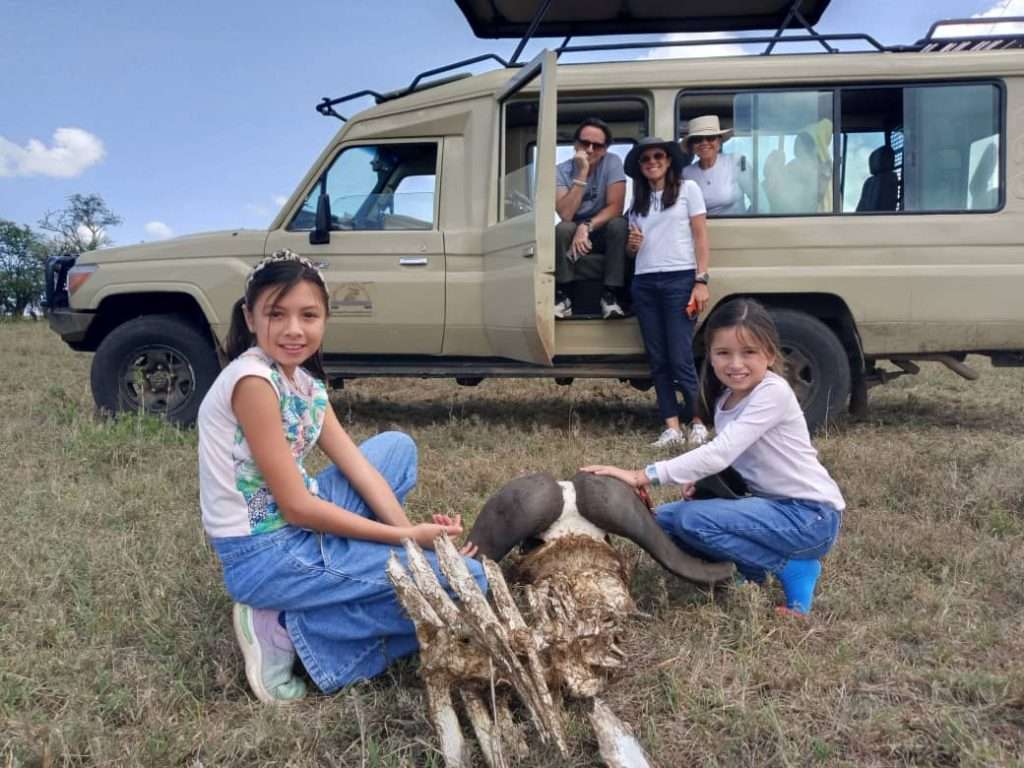
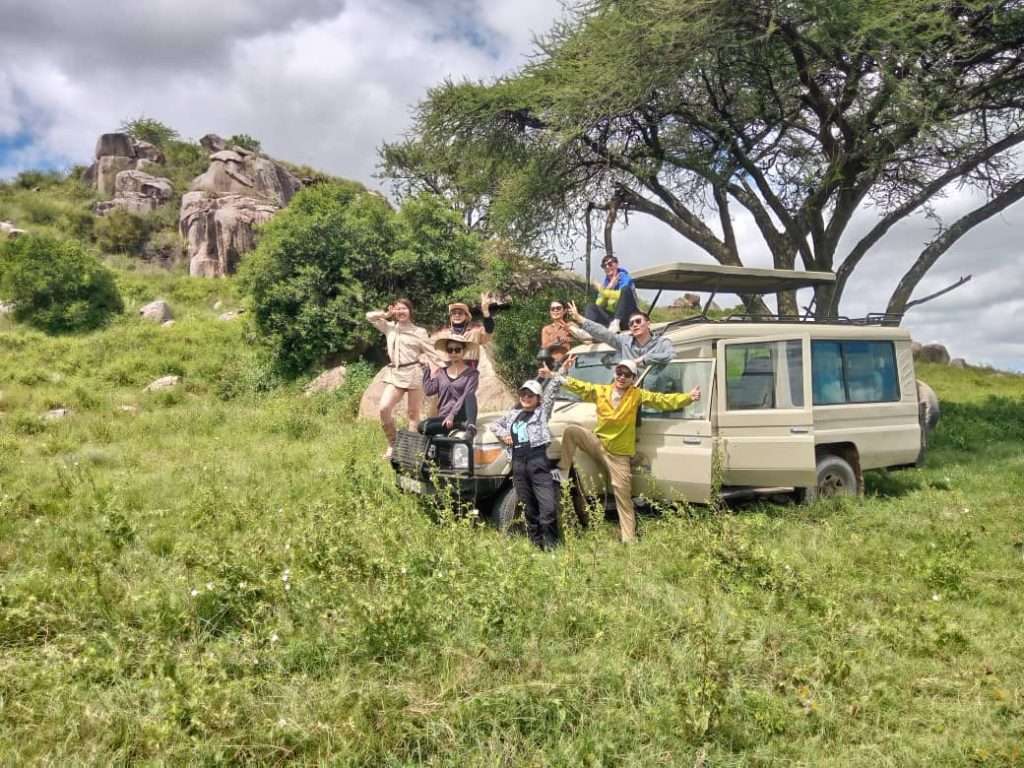
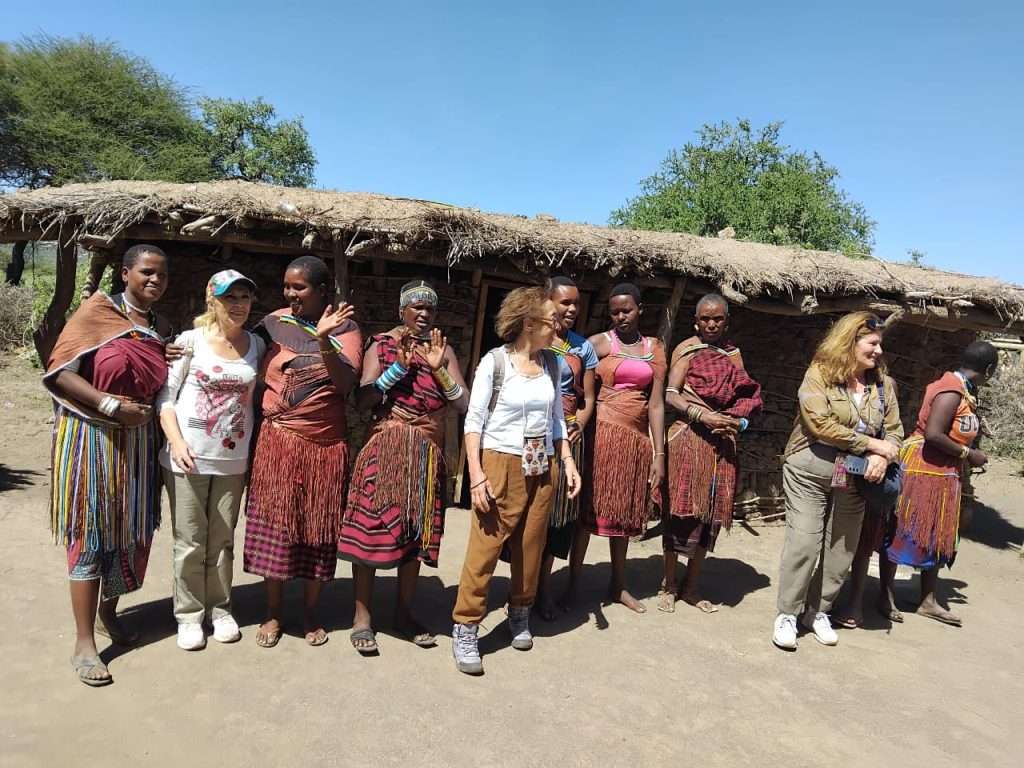
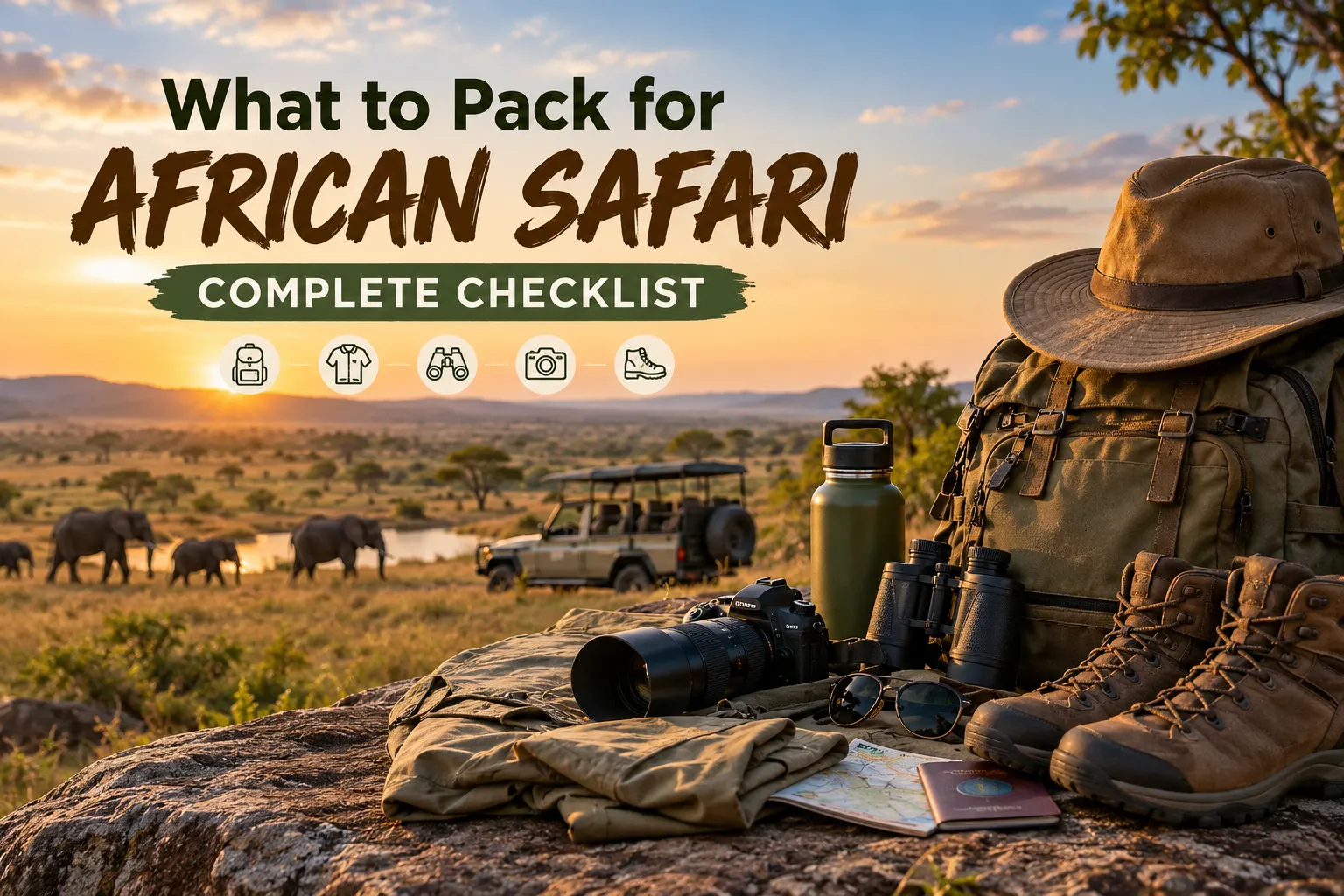
Before going into detail, here are the main things you should consider packing:
Passport and required travel documents
Lightweight, breathable clothing
Neutral-colored safari clothes
Comfortable walking shoes
Light jacket or fleece
Sun hat and sunglasses
Sunscreen and insect repellent
Personal toiletries
Personal medications
Small daypack
Camera and extra batteries
Binoculars
Phone and charging accessories
Travel adapter
Reusable water bottle
Small flashlight or headlamp
Swimsuit
Travel insurance documents
Your exact packing list should depend on your destination, season, accommodation and planned activities.
Your travel documents should be the first items you prepare. Keep important originals safely stored and consider carrying digital copies that you can access from your phone or email.
Carry a valid passport and check the applicable passport-validity and blank-page requirements for every country on your itinerary before departure.
Visa requirements vary according to your nationality and destination. Travelers visiting both Tanzania and Kenya should check the current entry requirements for each country separately before traveling.
Keep your travel insurance information accessible throughout your trip. Check that your policy provides suitable coverage for your planned destinations and safari activities.
Keep copies of your:
International flight details
Domestic flight details
Safari itinerary
Hotel and lodge reservations
Airport transfer information
Emergency contacts
Tour operator contact information
For your safari with African Chitah Limited, keeping a digital copy of your itinerary on your phone can make important trip information easier to access.
Safari clothing should be practical rather than complicated. Lightweight, breathable clothes are generally ideal for daytime activities.
Neutral colors such as khaki, beige, brown, olive and muted green are popular choices because they work well in natural environments.
Pack several lightweight T-shirts or breathable safari shirts. Long-sleeved shirts are especially useful for sun protection and cooler mornings.
A typical trip may include:
3–5 lightweight shirts
1–2 long-sleeved shirts
One warmer layer
Adjust the quantity according to the length of your safari and access to laundry facilities.
Lightweight trousers are useful for game drives, walking activities and evenings.
Consider packing:
2–3 pairs of lightweight trousers
1–2 pairs of shorts
Comfortable casual clothing for lodges
Quick-drying fabrics can be particularly convenient when traveling between several safari destinations.
Neutral and earthy colors are practical choices for a safari.
Good options include:
Khaki
Beige
Olive green
Brown
Tan
Grey
Very bright colors may be less practical for wildlife-focused activities, while dark clothing can become uncomfortable under strong daytime sun.
For destinations or activities where biting insects may be a concern, follow current guidance from your tour operator and travel-health professional about appropriate clothing and protection.
Africa is often associated with hot weather, but safari mornings and evenings can feel surprisingly cool.
This is particularly important in elevated areas such as the Ngorongoro highlands.
Pack:
Light fleece
Warm jacket
Lightweight sweater
Long trousers
Light scarf if desired
Layering is one of the easiest ways to stay comfortable. You can wear warmer layers during an early departure and remove them as temperatures rise.
You normally do not need heavy hiking boots for a safari dominated by vehicle-based game drives.
A comfortable pair of closed walking shoes or trainers will work for many travelers.
Consider bringing:
Comfortable closed walking shoes
Lightweight sandals or flip-flops
Hiking shoes if your itinerary includes longer walks
If you are combining your safari with a serious trek such as Mount Kilimanjaro, you will need a separate trekking-specific packing list.
You can spend many hours outdoors during a safari, so sun protection deserves space in your luggage.
Pack:
Broad-spectrum sunscreen
Wide-brimmed hat or safari hat
UV-protection sunglasses
Lightweight long-sleeved clothing
Lip balm with SPF
Apply sunscreen regularly, particularly during outdoor activities and open-vehicle game drives.
Mosquitoes and other insects can occur in many safari areas, although conditions vary according to location and season.
Useful items include:
Insect repellent
Long-sleeved shirts
Long trousers
Closed shoes for appropriate activities
For destination-specific malaria prevention, vaccinations and other health precautions, consult an appropriate medical or travel-health professional before departure.
A safari offers excellent opportunities to photograph lions, elephants, giraffes, zebras, wildebeest, birds and incredible landscapes.
You may want to bring:
DSLR or mirrorless camera
Telephoto lens
Wide-angle or standard lens
Spare memory cards
Extra batteries
Battery charger
Lens-cleaning cloth
Protective camera bag
A smartphone can also produce excellent travel photos, particularly for landscapes, lodge photography and close encounters.
Safari roads can become dusty, especially during dry conditions. Keep cameras and lenses protected when they are not being used and carry a lens cloth for cleaning.
Binoculars can make a significant difference to wildlife viewing.
Animals will not always be close to the safari vehicle. Binoculars can help you observe distant wildlife, birds and activity across open plains.
They can be particularly useful in destinations such as:
Serengeti National Park
Ngorongoro Crater
Tarangire National Park
Lake Manyara National Park
Masai Mara National Reserve
Amboseli National Park
A compact pair is usually easier to carry throughout the journey.
Many travelers carry several electronic devices, so organize your charging equipment before leaving home.
Consider packing:
Smartphone
Camera charger
Power bank
Charging cables
Universal travel adapter
Spare camera batteries
Earphones
Check the plug type and electrical requirements for the countries and properties on your itinerary before traveling.
Keep your toiletries simple and travel-friendly.
Useful items include:
Toothbrush and toothpaste
Deodorant
Shampoo and conditioner
Moisturizer
Lip balm
Hand sanitizer
Wet wipes
Tissues
Hairbrush or comb
Personal hygiene products
Some lodges provide basic toiletries, but carrying your preferred essentials means you are not dependent on what is available at each property.
Bring enough of your regular prescription medication for your entire trip, plus any documentation required for traveling with it.
A personal travel kit may include:
Prescription medication
Basic first-aid supplies
Plasters/bandages
Antiseptic
Hand sanitizer
Any other personal medicines recommended by your healthcare professional
Health requirements and disease risks differ between destinations and travelers. Seek personalized medical advice before your trip rather than relying solely on a general safari packing list.
A small backpack or daypack is extremely useful inside your safari vehicle.
You can use it to carry:
Camera
Phone
Sunscreen
Sunglasses
Hat
Personal medication
Power bank
Travel documents
Light jacket
Choose something compact and easy to keep with you rather than a large backpack that occupies unnecessary space inside the vehicle.
Soft-sided luggage is often more practical than large hard-shell suitcases, especially when an itinerary involves safari vehicles or small aircraft.
Before packing, check the baggage limits for every flight in your itinerary. Small regional and bush flights may have different weight, size and luggage-type restrictions from international airlines.
A practical setup may include:
Soft travel bag or duffel
Small daypack
Small secure document pouch
Pack only what you realistically need.
A Serengeti packing list should prioritize comfortable safari clothing, sun protection and photography equipment.
Useful essentials include:
Neutral lightweight clothing
Light jacket
Comfortable shoes
Hat
Sunglasses
Sunscreen
Camera
Binoculars
Power bank
Insect repellent
If your trip is focused on the Great Wildebeest Migration, expect to spend considerable time observing wildlife and waiting for natural events to unfold. Comfortable clothing and useful camera equipment become especially important.
Ngorongoro can feel cooler than lower-altitude safari destinations, particularly early in the morning.
Consider packing:
Warm jacket or fleece
Long trousers
Closed shoes
Hat
Sunglasses
Camera
Binoculars
Wearing layers allows you to adapt as the temperature changes during the day.
Tarangire is known for beautiful landscapes and excellent wildlife viewing.
Pack:
Lightweight safari clothing
Comfortable shoes
Hat
Sunscreen
Sunglasses
Camera
Binoculars
Light jacket
Insect repellent
During dry and dusty conditions, a scarf or buff can also be useful.
A combined Kenya and Tanzania safari may involve border crossings, different accommodations and multiple national parks.
Keep your packing simple and organized.
Along with your standard safari essentials, pay particular attention to:
Passport
Entry documents for both countries
Travel insurance
Flight documents
Safari itinerary
Appropriate payment methods
Chargers and adapters
Lightweight layered clothing
Always confirm current border, immigration and health requirements before your departure.
Combining a wildlife safari with Zanzibar means packing for two different travel experiences.
For safari, prioritize practical clothing and closed footwear. For Zanzibar, add lighter beachwear.
Consider adding:
Swimsuit
Beach sandals
Lightweight summer clothing
Sun hat
Sunscreen
Sunglasses
Beach cover-up
Smart-casual evening outfit
When visiting towns, villages, cultural attractions or religious sites, dress respectfully and follow local expectations.
Packing light makes moving between destinations easier.
Avoid bringing unnecessary items such as:
Too many clothes
Multiple pairs of heavy shoes
Large amounts of expensive jewelry
Bulky luggage
Unnecessary electronics
Excessive toiletries
Also check the latest customs and environmental restrictions for your destinations before packing. Rules concerning items such as plastic bags and restricted goods can change.
Couples can reduce luggage by sharing certain items.
Shared essentials can include:
Sunscreen
Insect repellent
Binoculars
First-aid supplies
Chargers
Travel adapter
Toiletries where appropriate
However, each traveler should keep their own passport, essential medication and critical travel documents readily accessible.
Families traveling with children should plan a few additional essentials.
Depending on the children’s ages, consider:
Comfortable children’s clothing
Sun hats
Child-appropriate sunscreen
Personal medicines
Snacks where permitted
Small entertainment items
Reusable water bottles
Extra clothing
Wet wipes
Copies of required family travel documents
Ask your safari operator about age restrictions or special arrangements for activities such as walking safaris before traveling.
The most useful rule for safari packing is simple: pack light, dress comfortably and prepare for changing conditions.
Do not fill your suitcase with items you are unlikely to use. Choose lightweight clothes that can be layered, comfortable footwear and reliable sun protection.
Check your luggage restrictions, passport and entry requirements, health advice and weather conditions shortly before departure because these can change.
Most importantly, leave enough room to enjoy the journey rather than worrying about your luggage.
With the right preparation, you can focus on what brought you to Africa in the first place: incredible wildlife, spectacular landscapes, fascinating cultures and unforgettable safari experiences.
Ready to experience Tanzania and Kenya?
African Chitah Limited offers wildlife safaris, Serengeti adventures, Ngorongoro tours, Tanzania–Kenya safari packages, Kilimanjaro trekking, Zanzibar holidays and carefully planned private tours.
Our team can help you plan your safari itinerary and understand what to bring according to your destination, season and activities.
Pack lightweight neutral clothing, comfortable walking shoes, a light jacket, hat, sunglasses, sunscreen, insect repellent, personal medication, travel documents, camera, chargers and a small daypack. Your final list should be adjusted for your destination and season.
Neutral colors such as khaki, beige, olive, brown and grey are practical safari choices. They are comfortable, easy to coordinate and suitable for natural environments.
Not necessarily. Comfortable closed walking shoes or trainers are usually sufficient for vehicle-based safaris. Proper hiking footwear is more important for trekking and longer walking activities.
Yes, bringing at least one warm layer is sensible. Early-morning and evening game drives can be cool, particularly around elevated destinations such as Ngorongoro.
You can bring luggage, but soft-sided bags are often more convenient for safari travel. If your itinerary includes domestic or bush flights, check the specific airline's baggage limits before packing.
Pack neutral safari clothing, comfortable shoes, a light jacket, camera gear and sun protection for the Serengeti. Add swimwear, sandals, lightweight beach clothing and appropriate clothing for cultural or religious sites in Zanzibar.
Safari Guide Private Safari vs Group Safari: Which is Better for You? Planning a safari in Tanzania is exciting, but…
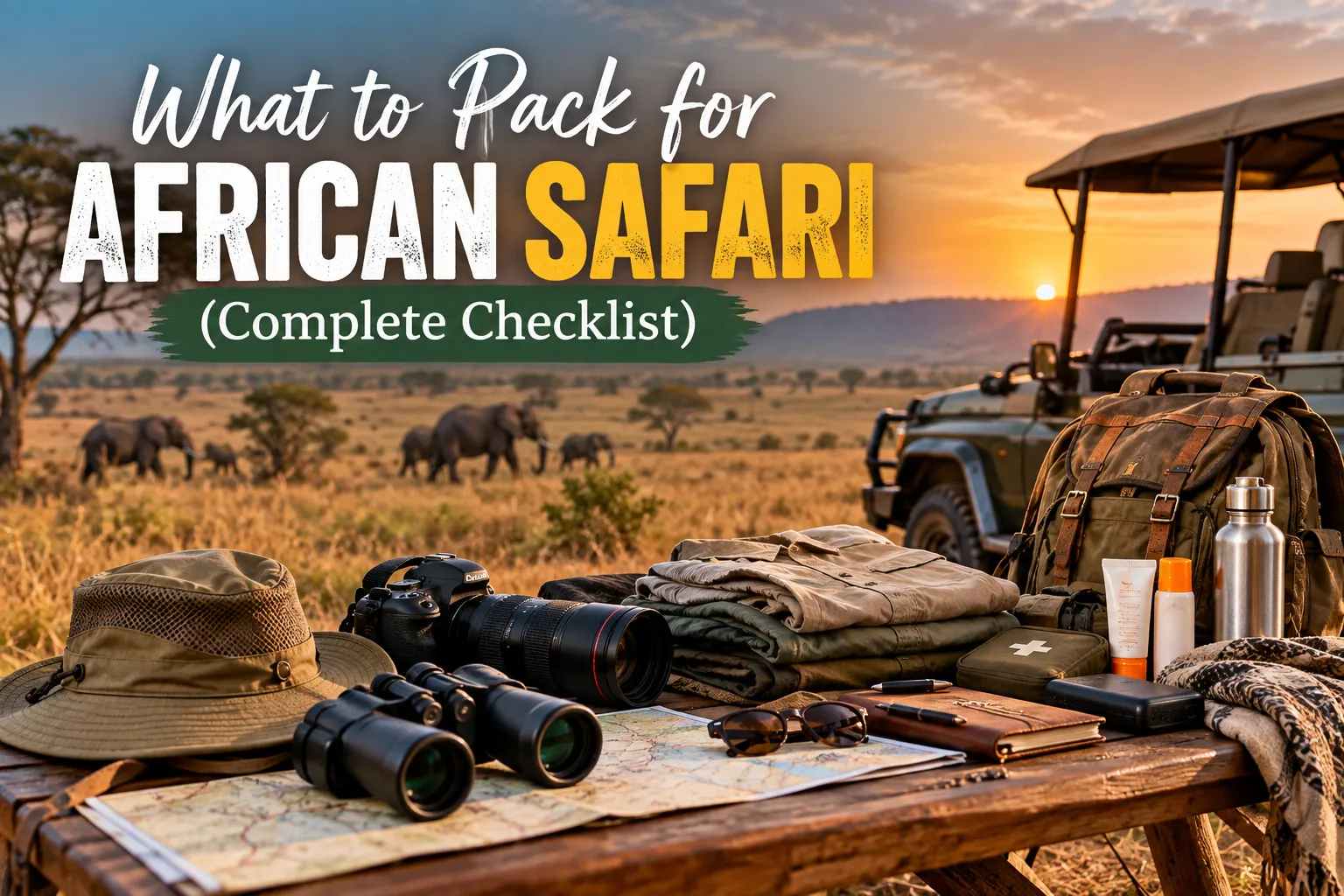
Safari Guide What to Pack for African Safari (Complete Checklist) Planning an African safari is exciting, but knowing exactly what…

Safari Tour Guide
Expert Tanzania safari specialists offering unforgettable wildlife tours, Kilimanjaro treks, and Zanzibar beach holidays across East Africa.