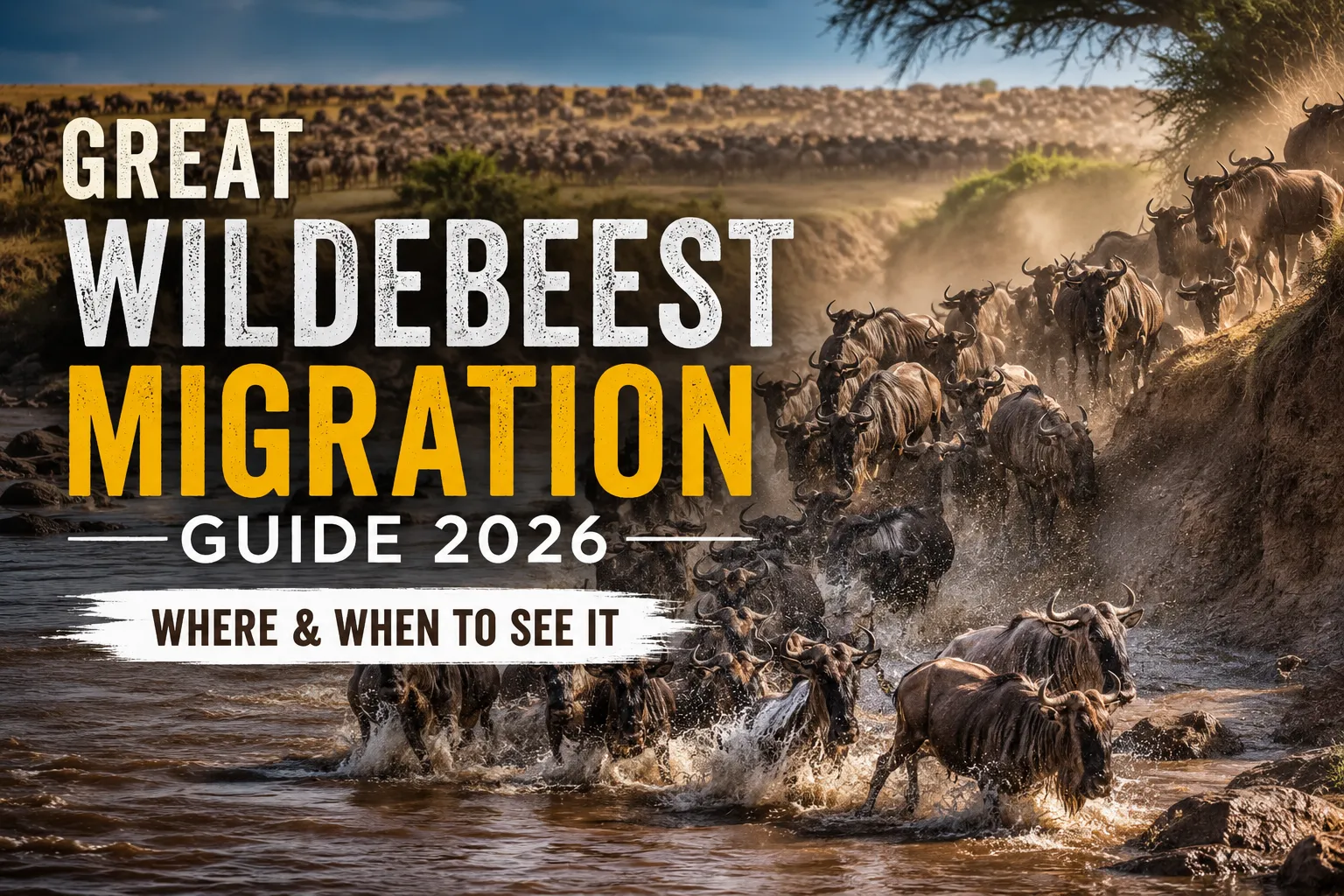
The Great Wildebeest Migration is one of Africa’s most spectacular wildlife experiences. Every year, millions of wildebeest, along with large numbers of zebras and gazelles, move through the Serengeti ecosystem in Tanzania and the Maasai Mara in Kenya in search of fresh grazing and water.
But the migration is not a single event that happens on one specific date. It is a continuous natural cycle, and the location of the herds changes throughout the year.
If you are planning a Tanzania safari in 2026, understanding where the migration is likely to be—and which months offer the best experiences—can help you choose the right itinerary.
This guide explains the Great Wildebeest Migration 2026, including the best months to travel, where to see the herds, calving season, river crossings, safari planning tips, and what to expect during each stage.
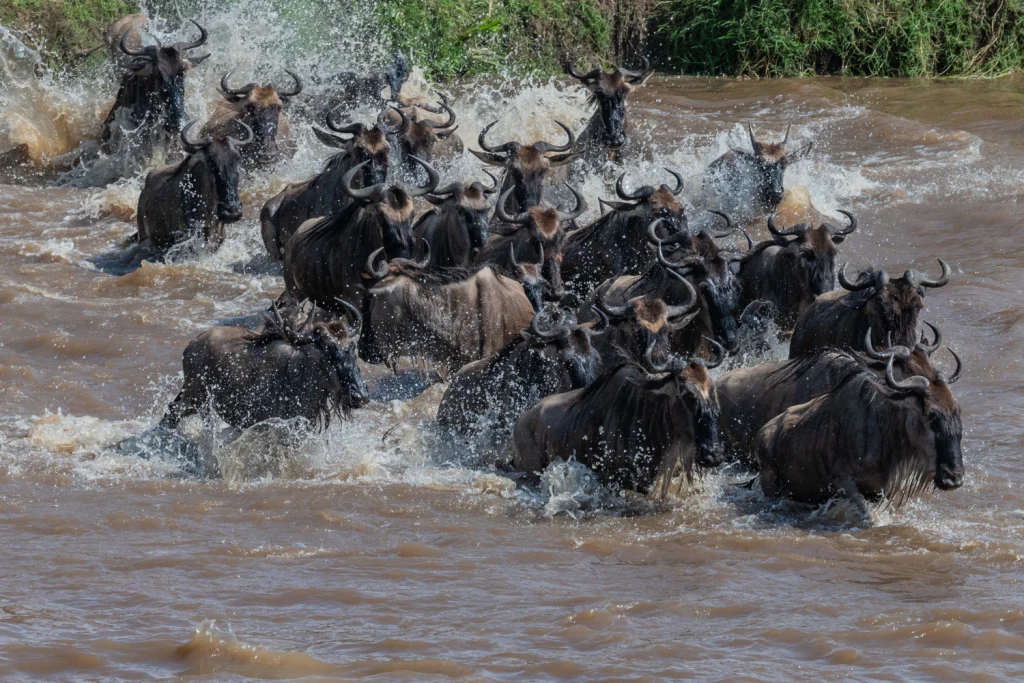
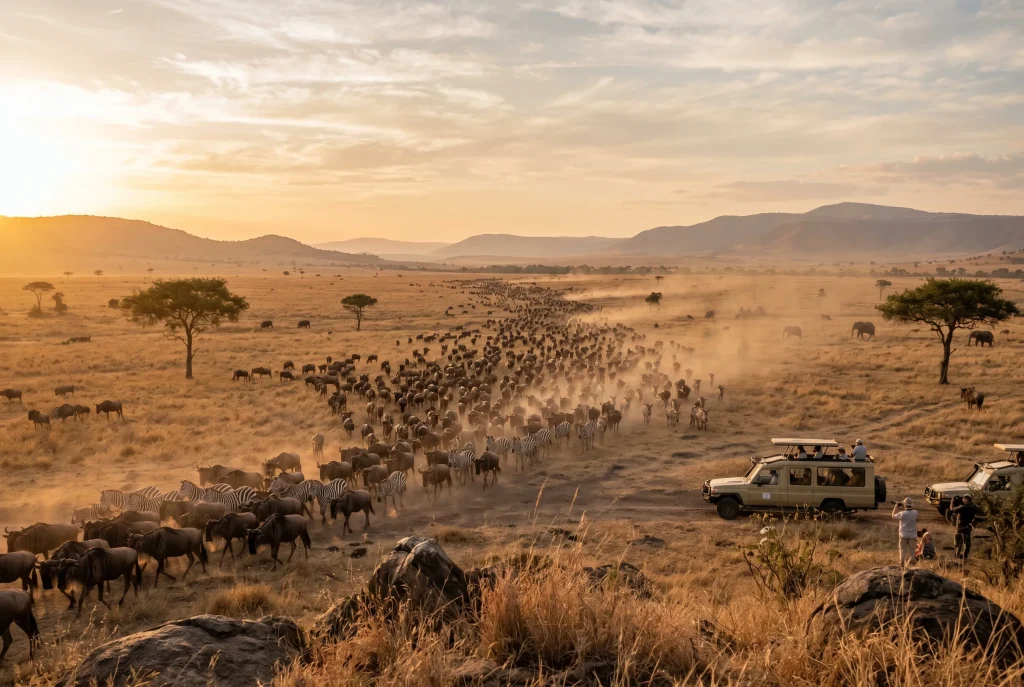
The Great Wildebeest Migration is an annual movement of huge herds of wildebeest across the Serengeti-Mara ecosystem.
The animals constantly follow rainfall and fresh grass. Their movement takes them through different parts of northern Tanzania and southern Kenya during the year.
Wildebeest are the main stars of the migration, but they are accompanied by zebras, gazelles and other grazing animals. Their movement also attracts predators such as lions, cheetahs, leopards, hyenas and crocodiles.
For visitors, this creates opportunities to witness:
The migration is therefore much more than simply watching wildebeest move from one location to another. It is a complete wildlife experience.
The migration mainly takes place across the Serengeti National Park and surrounding areas of Tanzania, eventually moving north into Kenya’s Maasai Mara National Reserve.
Tanzania is particularly important because much of the annual migration cycle takes place in the Serengeti ecosystem.
The exact location of the herds changes according to rainfall, grazing conditions and other natural factors. This means that safari planning should focus on the season and expected migration zone, rather than assuming the animals will always be in one particular area.
If you are wondering when to see the Great Migration in 2026, the following seasonal guide can help.
The beginning of the year is one of the most fascinating periods of the migration.
The herds generally gather around the southern Serengeti and Ndutu area, where fresh grass provides excellent feeding conditions.
This period is famous for the wildebeest calving season.
Thousands of young wildebeest are born during a relatively short period. The abundance of newborn animals also attracts predators, creating exciting wildlife viewing opportunities.
You may see:
For travelers interested in predator action and newborn wildlife, January to March can be an excellent time for a Tanzania safari.
After the calving period, the herds gradually begin moving as conditions change.
April and May are generally part of Tanzania’s green or rainy season. The landscape can become beautifully green, creating excellent scenery for photography.
This period can also offer fewer tourists compared with the busiest migration months.
Travelers who prefer:
may find this period attractive.
However, weather conditions can be less predictable, so travelers should plan accordingly.
Around June and July, the migration gradually moves northward through the Serengeti.
This is an exciting period because the herds are getting closer to one of the most dramatic stages of the migration: the river crossings.
The northern Serengeti becomes an important area for travelers hoping to experience large herds moving through the landscape.
Wildlife viewing can also be excellent because the region contains resident predators and other animals.
For many travelers, July to September represents the most dramatic period of the Great Migration.
During this period, large herds may reach rivers in northern Tanzania and cross into Kenya.
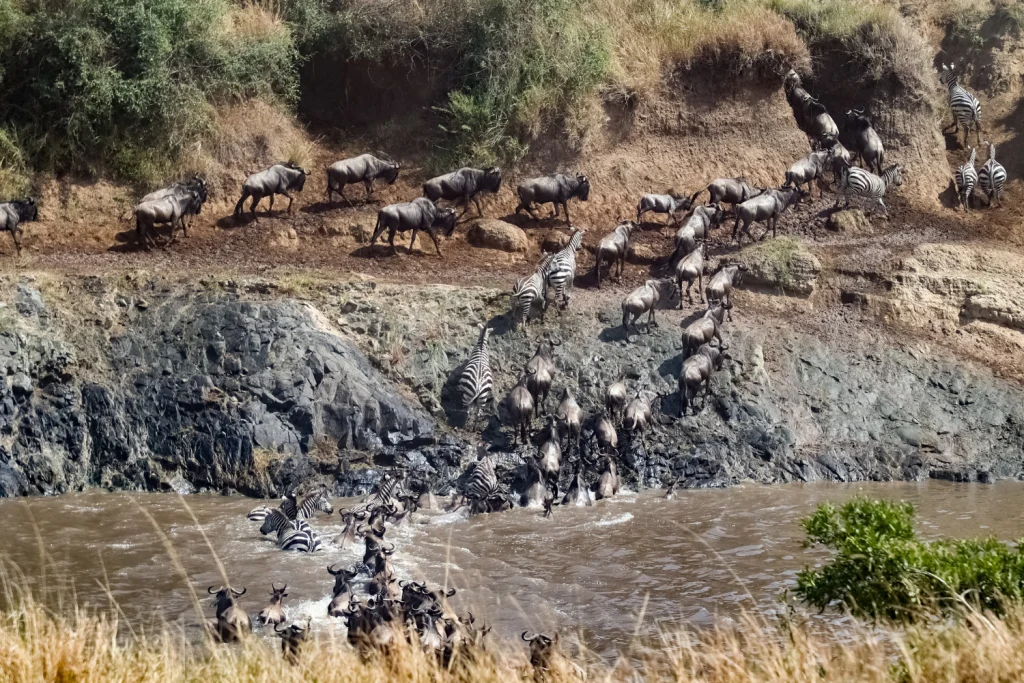
The famous Mara River crossings can be spectacular, but they are also unpredictable. Wildebeest do not cross simply because tourists have arrived. The animals may gather near the river for hours or days before finally deciding to move.
When a crossing happens, you may witness:
This is one of the reasons why Northern Serengeti safari packages are particularly popular during this period.
After spending time in northern areas, many herds begin moving southward again.
October can still provide excellent wildlife viewing, particularly for travelers who want to experience the migration without necessarily focusing entirely on river crossings.
The northern Serengeti can remain productive, while other parts of the ecosystem begin receiving migrating herds.
As the short rains arrive, fresh grass begins appearing in the southern Serengeti.
The herds gradually move back toward the southern plains.
By December, the migration cycle is beginning to prepare for the next calving season.
This makes late-year travel an interesting option for visitors who want to experience the beginning of another migration cycle.
There is no single “best” month because the migration offers different experiences throughout the year.
Your ideal travel period depends on what you want to see.
| Experience | Recommended Period |
|---|---|
| Calving season | January–March |
| Newborn wildebeest | January–March |
| Predator activity | January–March |
| Green landscapes | April–May |
| Northern Serengeti herds | June–October |
| River crossing opportunities | July–September |
| Quieter safari experience | April–May / November |
| Migration returning south | October–December |
For a first-time migration safari, June to October is often an attractive period because it combines strong wildlife viewing with opportunities to follow the migration through the Serengeti.
However, river crossings are naturally unpredictable, so no responsible safari operator should guarantee a specific crossing.
Accommodation location is extremely important.
If your main goal is to see the migration, staying in a location close to the expected movement of the herds can reduce unnecessary driving and give you more time for wildlife viewing.
Depending on the season, travelers may consider areas such as:
Southern Serengeti / Ndutu
Best suited to the calving season.
Central Serengeti
A useful year-round safari area with abundant resident wildlife.
Northern Serengeti
Particularly attractive during the northward migration and river-crossing season.
Maasai Mara
Excellent for the later stages of the migration when herds move into Kenya.
When selecting a safari package, don’t only look at the number of days. Ask where you will actually spend each night.
Both countries offer outstanding migration experiences, but the experience can be different.
Tanzania is especially important for travelers who want to follow the migration across the Serengeti ecosystem, including the southern calving grounds and northern river-crossing areas.
Kenya’s Maasai Mara becomes particularly important when the herds move across the border into Kenya.
For travelers with enough time, combining Tanzania and Kenya can create an extended East African safari experience.
A cross-border itinerary can include destinations such as Serengeti, Maasai Mara, Lake Nakuru, Ol Pejeta and Amboseli.
Yes.
The migration itself is centered around herbivores, but the large concentration of prey attracts predators.
Depending on your location and timing, you may encounter:
The Serengeti is also an excellent destination for travelers hoping to experience a broader range of African wildlife beyond the migration.
River crossings are among the most famous scenes associated with the Great Migration.
When the herds reach rivers such as the Mara River, they may gather along the banks before crossing.
The scene can become intense. Thousands of animals may move together while crocodiles wait in the water.
However, river crossings are completely natural events and cannot be scheduled.
The animals may:
This unpredictability is part of what makes the experience authentic.
A short safari can provide a taste of the migration, but longer itineraries generally give you more flexibility.
For example, a 6-day migration safari can provide more opportunities to explore different areas of the Serengeti compared with a very short trip.
Longer Tanzania and Kenya itineraries can provide even more variety by combining several national parks and reserves.
The right duration depends on your budget, travel dates and wildlife priorities.
Pack practical clothing suitable for changing temperatures and outdoor activities.
Recommended items include:
Early mornings can be surprisingly cool, even during warmer months, so a light jacket is useful.
The migration provides incredible opportunities for wildlife photography.
A telephoto lens can help capture animals from a safe distance, while a wider lens is useful for landscapes and large herds.
For better photographs:
A professional guide can also help position the vehicle safely and responsibly for better viewing opportunities.
When comparing migration safari packages, consider more than price.
Look at:
Travel season:
Choose dates based on the experience you want.
Safari location:
Confirm which part of the Serengeti you will visit.
Number of safari days:
More days generally provide greater flexibility.
Accommodation:
Check whether the package uses safari lodges, tented camps or mobile camps.
Vehicle:
A 4×4 safari vehicle with a pop-up roof is ideal for wildlife viewing.
Guide:
An experienced guide can make a major difference to your safari experience.
Private or shared safari:
Private safaris offer greater flexibility, while shared safaris can be more budget-friendly.
African Chitah Limited offers Tanzania safari experiences designed around the country’s most famous wildlife destinations.
For travelers interested in migration experiences, the company offers a 6-Day Wildebeest Migration Safari, as well as longer Tanzania and Kenya safari options.
You can also explore the 6 Days Calving Season Safari in Ndutu, designed for travelers interested in experiencing the southern Serengeti during the calving period.
For a longer East African adventure, consider combining Tanzania and Kenya to experience the Serengeti, Maasai Mara and other major wildlife destinations.
The Great Wildebeest Migration 2026 is not simply an event that happens on one particular day. It is a year-round natural cycle shaped by rainfall, fresh grass, water and the instincts of millions of animals.
January to March offers the spectacular calving season. June to October provides excellent opportunities to follow the northern migration, while July to September is particularly popular for travelers hoping to witness river crossings.
The most important thing is to choose your travel dates and safari route according to the experience you want—not simply a generic “migration season.”
With the right itinerary, experienced guide and well-positioned accommodation, a Tanzania safari can bring you remarkably close to one of nature’s greatest wildlife spectacles.
It depends on your preferred experience. January to March is excellent for calving, while July to September is popular for northern migration and potential river-crossing experiences.
The herds move through different parts of the Serengeti ecosystem throughout the year. Southern Serengeti and Ndutu are important during calving season, while northern Serengeti becomes important later in the year.
Yes, river crossings may occur during the northern migration, particularly around July to September. However, crossings are natural events and cannot be guaranteed on a specific date.
Absolutely. The migration is suitable for first-time visitors as well as experienced safari travelers. An experienced guide can help you understand the animals and navigate the safari areas.
Both are excellent choices. Tanzania allows travelers to experience major stages of the migration across the Serengeti, while Kenya's Maasai Mara is an important destination when the herds move north. Combining both countries is also possible.
A 5–7 day safari can provide a strong migration experience, while longer itineraries offer more flexibility and allow you to explore additional parks and wildlife areas.

Safari Guide Private Safari vs Group Safari: Which is Better for You? Planning a safari in Tanzania is exciting, but…
Safari Guide What to Pack for African Safari (Complete Checklist) Planning an African safari is exciting, but knowing exactly what…

Safari Tour Guide
Expert Tanzania safari specialists offering unforgettable wildlife tours, Kilimanjaro treks, and Zanzibar beach holidays across East Africa.