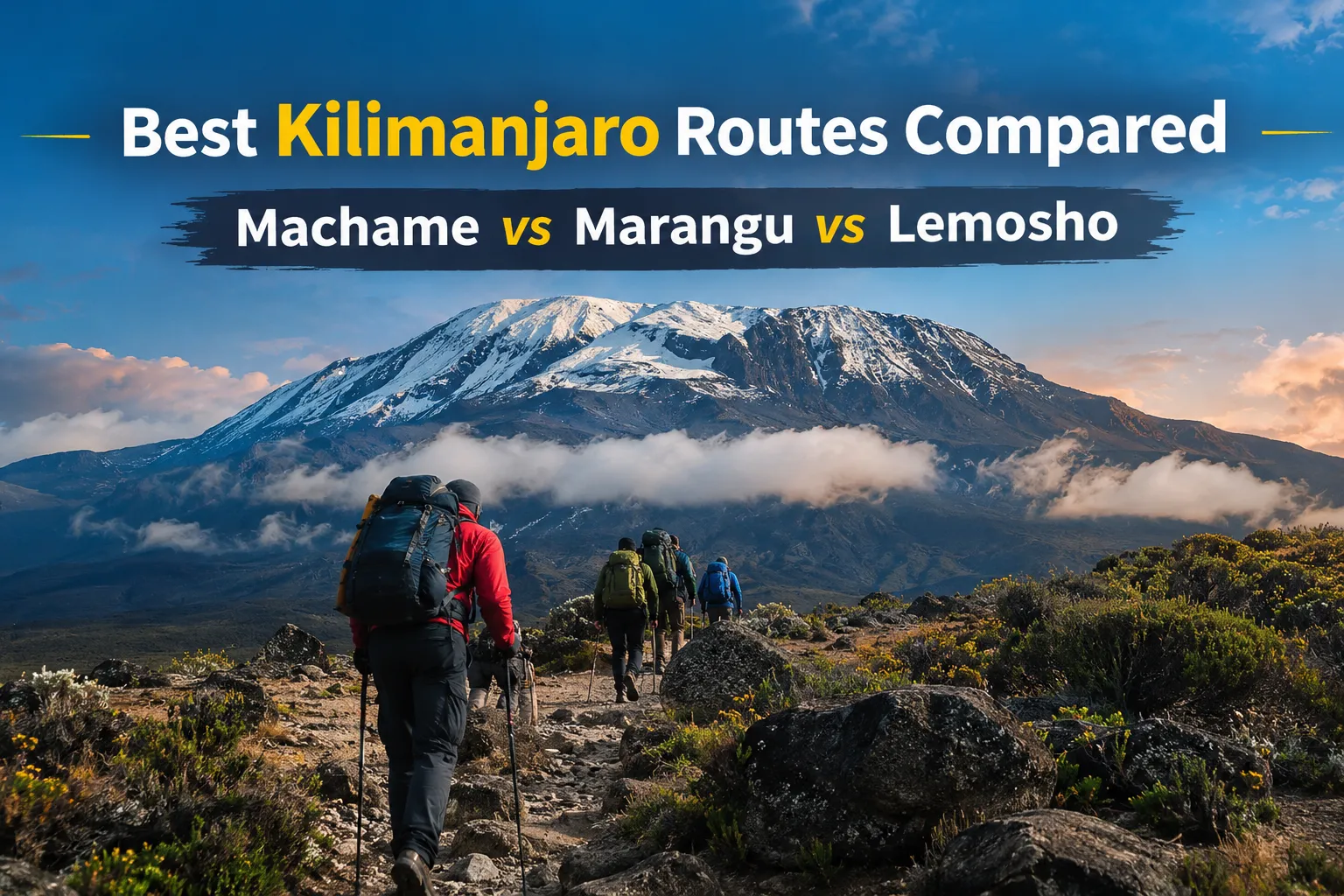
Climbing Mount Kilimanjaro is one of the most exciting adventures in Africa. Standing at 5,895 meters (19,341 feet), Kilimanjaro is the highest mountain in Africa and one of the world’s most famous trekking destinations. Every year, travelers visit Tanzania with the dream of reaching Uhuru Peak and watching the sunrise from the Roof of Africa.
But before starting your journey, there is one important decision to make: Which Kilimanjaro climbing route should you choose?
Among the most popular options are the Machame Route, Marangu Route, and Lemosho Route. Each offers a different trekking experience, with its own landscapes, accommodation, difficulty, duration, and acclimatization opportunities.
The Machame Route is famous for its beautiful scenery and adventurous trails. The Marangu Route is known for its mountain huts and relatively direct path. Meanwhile, the Lemosho Route offers spectacular landscapes, quieter early sections, and excellent opportunities for gradual altitude adjustment.
In this complete guide, African Chitah Limited compares these three Kilimanjaro trekking routes to help you choose the best option for your fitness level, travel schedule, budget, and climbing goals.

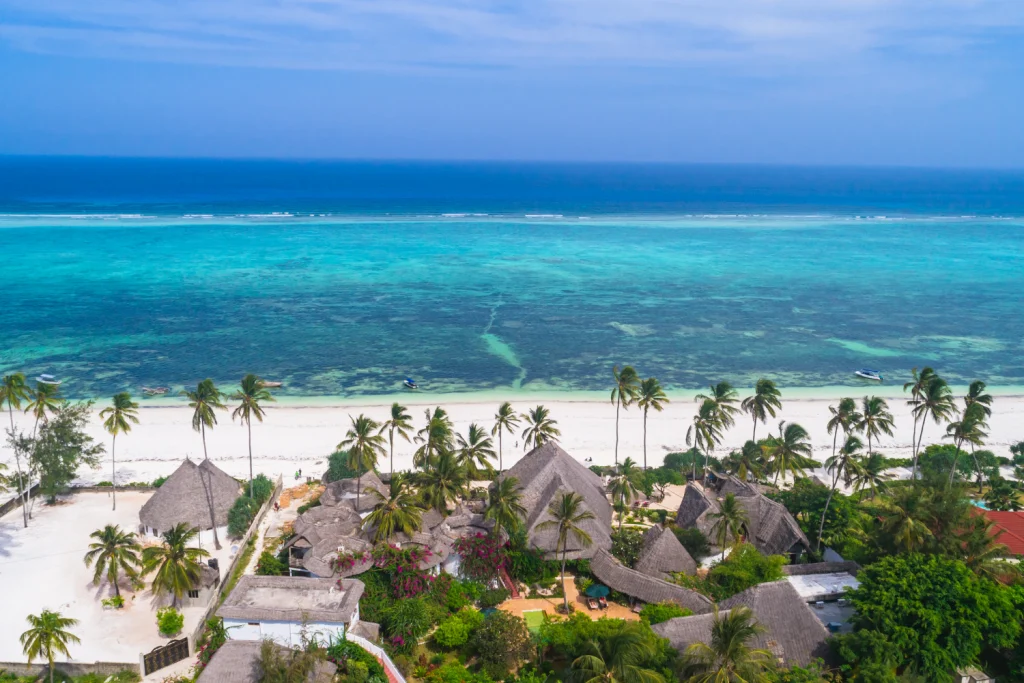
Mount Kilimanjaro is located in northern Tanzania, near the town of Moshi. Unlike technical mountain climbing expeditions, its main trekking routes generally do not require advanced mountaineering skills or rope climbing.
However, reaching the summit is still physically demanding.
Trekkers walk through several ecological zones, including tropical rainforest, moorland, alpine desert, and the cold summit environment.
As the altitude increases, oxygen availability decreases, making proper acclimatization essential.
Choosing a route with enough trekking days can significantly improve your opportunity to adjust to the altitude.
The three routes discussed here differ in important ways:
Machame Route: Scenic, adventurous, and popular among trekkers.
Marangu Route: The classic hut-accommodation route with a shorter standard itinerary.
Lemosho Route: A longer, scenic route with more time for acclimatization.
Understanding these differences is the first step toward planning a successful Kilimanjaro adventure.
| Feature | Machame Route | Marangu Route | Lemosho Route |
|---|---|---|---|
| Popular name | Whiskey Route | Coca-Cola Route | Lemosho Route |
| Typical duration | 6–7 days | 5–6 days | 7–8 days |
| Difficulty | Challenging | Moderate to challenging | Moderate to challenging |
| Accommodation | Camping | Mountain huts | Camping |
| Scenery | Excellent | Beautiful | Excellent |
| Acclimatization | Better with 7 days | Limited on shorter trips | Generally very good |
| Crowds | Often busy | Popular route | Quieter at the beginning |
| Best suited for | Adventurous hikers | Hut-preferring trekkers | Trekkers prioritizing acclimatization |
| Summit | Uhuru Peak | Uhuru Peak | Uhuru Peak |
Important: Every Kilimanjaro route reaches high altitude. No route guarantees summit success, and the number of days, individual health, weather, and acclimatization all matter.
The Machame Route is one of Kilimanjaro’s most popular trekking routes. Often called the Whiskey Route, it is known for dramatic landscapes, varied terrain, and a rewarding mountain adventure.
The trail approaches Kilimanjaro from the southwest and passes through beautiful rainforest before climbing into open moorland and rocky alpine landscapes.
One of the biggest attractions of the Machame Route is the changing scenery.
Trekkers experience lush forest, expansive mountain views, unusual volcanic landscapes, and famous locations such as the Shira Plateau and Barranco Wall.
The route also follows a useful acclimatization pattern on certain days, where hikers climb to a higher altitude before sleeping lower.
This helps the body adjust gradually to the mountain environment.
Day 1: Machame Gate to Machame Camp
Begin the trek through tropical rainforest, where you may encounter unique plants and wildlife.
Day 2: Machame Camp to Shira Camp
Climb out of the forest into moorland, enjoying increasingly impressive views of Kilimanjaro.
Day 3: Shira Camp to Barranco Camp
Trek toward Lava Tower before descending to Barranco Camp, creating an important acclimatization opportunity.
Day 4: Barranco Camp to Barafu Camp
Climb the famous Barranco Wall and continue across challenging mountain terrain toward the high camp. On a six-day itinerary, this is a demanding day.
Day 5: Barafu Camp to Uhuru Peak, then Mweka Camp
Begin the summit attempt during the night, reach Uhuru Peak if conditions allow, and descend toward Mweka Camp.
Day 6: Mweka Camp to Mweka Gate
Complete the final descent through rainforest and celebrate your Kilimanjaro trekking experience.
Spectacular scenery and diverse landscapes.
Opportunities for altitude acclimatization.
Famous trekking landmarks, including Barranco Wall.
An adventurous mountain experience.
Suitable for reasonably fit trekkers who enjoy hiking.
The route includes steep sections and can be physically demanding. It also attracts many climbers, particularly during popular trekking seasons.
A six-day itinerary is relatively fast, so travelers who have additional time should consider whether a seven-day version would provide a more comfortable acclimatization schedule.
Explore: 6-Day Machame Route Trek
The Marangu Route is one of the oldest and best-known routes on Mount Kilimanjaro.
Commonly called the Coca-Cola Route, it is particularly famous because it offers mountain hut accommodation rather than the camping arrangements used on most other routes.
Marangu approaches Kilimanjaro from the southeast and generally follows the same broad trail for ascent and descent.
The biggest advantage of the Marangu Route is its hut accommodation.
Instead of sleeping in tents, trekkers stay in shared mountain huts at designated camps.
This can appeal to travelers who prefer a roof over their heads during the trek.
The route also offers beautiful landscapes, beginning with tropical forest and continuing through moorland toward the alpine environment.
However, its reputation as an easy route can be misleading. The final summit climb is extremely demanding, and shorter itineraries provide less time for altitude adjustment.
Day 1: Marangu Gate to Mandara Hut
Start hiking through tropical rainforest and reach Mandara Hut for your first overnight stay.
Day 2: Mandara Hut to Horombo Hut
Continue into the moorland zone, enjoying views of Kilimanjaro’s volcanic peaks.
Day 3: Horombo Hut to Kibo Hut
Trek across the high-altitude alpine landscape toward Kibo Hut, the base for your summit attempt.
Day 4: Kibo Hut to Uhuru Peak, then Horombo Hut
Begin the summit climb during the night, passing Gilman’s Point and continuing toward Uhuru Peak if conditions permit. Descend to Horombo Hut afterward.
Day 5: Horombo Hut to Marangu Gate
Walk down through the mountain’s vegetation zones and complete your trek.
Mountain huts instead of tents.
A relatively direct trekking route.
Often lower-priced than longer routes.
Suitable for travelers who prefer hut accommodation.
A classic Kilimanjaro trekking experience.
The main concern with a five-day Marangu itinerary is limited acclimatization time.
Although some trail sections are less steep than those on Machame, the altitude still presents a serious challenge.
The route can also be busy, and trekkers use much of the same trail during ascent and descent.
Our suggestion: If your schedule permits, consider a six-day Marangu itinerary with an additional acclimatization day.
Explore: 5-Day Marangu Route Trek
The Lemosho Route is widely regarded as one of Kilimanjaro’s most scenic trekking routes.
It approaches the mountain from the western side, beginning in a relatively remote forest environment before crossing the beautiful Shira Plateau.
The route gradually joins sections used by other Kilimanjaro trails and offers a memorable journey through changing landscapes.
The biggest attraction of Lemosho is its combination of scenery and a longer trekking schedule.
An eight-day itinerary allows climbers to gain altitude more gradually compared with shorter five- or six-day routes.
This extra time can improve acclimatization opportunities and reduce the pressure of rushing toward the summit.
Lemosho is also appealing to travelers who enjoy nature, photography, and spending more time exploring the mountain.
Day 1: Londorossi Gate to Mti Mkubwa Camp
Begin the trek through beautiful mountain rainforest.
Day 2: Mti Mkubwa Camp to Shira 1 Camp
Climb toward the Shira Plateau as the landscape becomes more open.
Day 3: Shira 1 Camp to Shira 2 Camp
Cross the scenic plateau while enjoying wide mountain views.
Day 4: Shira 2 Camp to Barranco Camp
Trek toward Lava Tower before descending to Barranco Camp for an important acclimatization opportunity.
Day 5: Barranco Camp to Karanga Camp
Climb Barranco Wall and continue across rocky terrain to Karanga Camp.
Day 6: Karanga Camp to Barafu Camp
Continue to the high camp and prepare for the summit attempt.
Day 7: Barafu Camp to Uhuru Peak, then Mweka Camp
Begin the summit climb overnight and descend after reaching your highest safe point.
Day 8: Mweka Camp to Mweka Gate
Complete the descent and finish your Kilimanjaro adventure.
Excellent landscape diversity.
More time for acclimatization on an eight-day itinerary.
Less crowded initial trail sections.
A rewarding experience for photographers.
Suitable for many first-time Kilimanjaro trekkers with appropriate preparation.
Lemosho generally requires more days on the mountain, increasing the overall trip cost.
It also involves camping and several physically demanding trekking days.
Despite its advantages, reaching the summit still requires fitness, preparation, suitable weather, and safe altitude management.
Explore: 8-Day Lemosho Route Trek
Many travelers want to know which Kilimanjaro route provides the greatest chance of reaching Uhuru Peak.
There is no universally reliable success percentage for each route because reported figures can vary between operators, itineraries, seasons, and methods of calculation.
However, longer itineraries generally offer better opportunities for acclimatization than shorter itineraries.
An eight-day Lemosho trek gives travelers more time to adjust to altitude than a five-day Marangu trek.
Similarly, a seven-day Machame itinerary usually provides a more gradual schedule than the six-day version.
Summit success also depends on individual health, hiking pace, weather, preparation, and the guide team’s decisions.
Always choose a safe itinerary rather than selecting a route only because it is shorter or cheaper.
First-time mountain trekkers often assume the Marangu Route is the easiest option.
While its hut accommodation and relatively direct path may seem appealing, the short five-day itinerary can make acclimatization more difficult.
For beginners with sufficient time and budget, the eight-day Lemosho Route is often a strong choice because it allows a more gradual ascent.
Machame can also be suitable for beginners who have prepared physically and are comfortable with steeper trails and camping.
Ultimately, the best route is the one that matches your fitness, available time, and ability to acclimatize safely.
Kilimanjaro can be climbed throughout the year, but weather conditions vary.
Two commonly preferred periods are:
January to early March: Often offers relatively favorable trekking conditions, although temperatures can be cold at higher elevations.
June to October: Generally a popular drier period, with clear views possible and more trekkers on the mountain.
April and May are typically wetter months, while November can also bring increased rainfall.
Weather can change quickly at high altitude, so even during a favorable season, climbers should prepare for rain, wind, snow, and freezing summit temperatures.
Packing the right equipment is essential for comfort and safety.
Important items include:
Waterproof hiking boots that are already broken in.
Thermal base layers and warm insulating clothing.
Waterproof jacket and trousers.
Warm gloves, hat, and neck protection.
A suitable sleeping bag for cold mountain conditions.
Headlamp with spare batteries.
Hiking poles.
Refillable water bottles or hydration system.
Sunscreen, sunglasses, and lip protection.
Personal medication and basic first-aid supplies.
Ask your trekking operator for a complete equipment checklist before departure.
Altitude sickness is one of the most important risks to understand before climbing Kilimanjaro.
Symptoms can include headache, nausea, dizziness, tiredness, and difficulty sleeping.
More serious altitude illness can be life-threatening.
Walking slowly, choosing a longer itinerary, staying appropriately hydrated, and communicating symptoms to your guide are important precautions.
Never continue ascending with worsening altitude symptoms. Your guide should follow an appropriate altitude-safety protocol, including descent when necessary.
Consult a qualified healthcare professional before traveling to discuss your fitness, medical history, and whether altitude-related medication is appropriate.
Choosing between Machame, Marangu, and Lemosho depends on what matters most to you.
If you want dramatic scenery and an adventurous trail, Machame may be ideal.
If you prefer mountain huts and a classic trekking route, Marangu may suit your travel style.
If you have more time and want excellent scenery with additional acclimatization opportunities, Lemosho is often the strongest option.
African Chitah Limited offers several Kilimanjaro trekking packages to help travelers explore Africa’s highest mountain.
Explore our Kilimanjaro climbing packages:
You can also explore our complete Kilimanjaro Trekking Packages to find the right adventure.
Start planning your Kilimanjaro climb today!
📞 WhatsApp: +255 756 312 202
📧 Email: [email protected]
🌐 Website: https://africanchitah.co.tz/
Lemosho is often preferred for its scenery and longer acclimatization schedule. Machame is ideal for adventurous trekkers, while Marangu is suitable for travelers who prefer mountain huts. The best choice depends on your fitness, budget, and available time.
Machame is physically demanding, with steep sections and long trekking days. However, beginners with good preparation and appropriate fitness can attempt it. A longer itinerary generally provides better acclimatization opportunities.
Marangu is traditionally known as the Coca-Cola Route because of its long-established trekking infrastructure and reputation as a more comfortable route, particularly due to its hut accommodation.
For many travelers, yes. The longer itinerary provides additional time for acclimatization, beautiful landscapes, and a less crowded start. However, it requires more trekking days and usually a higher overall budget.
Seven or eight days is often preferable for acclimatization compared with five-day itineraries. The ideal duration depends on the route, personal fitness, previous altitude experience, and professional guidance.
Technical climbing experience is generally not required on the standard trekking routes. However, good physical preparation, suitable equipment, a qualified guide, and awareness of altitude risks are essential.
Safari Guide Best Kilimanjaro Routes Compared (Machame vs Marangu vs Lemosho) Climbing Mount Kilimanjaro is one of the most exciting…

Safari Guide How Much Does a Tanzania Safari Cost in 2026? Planning a Tanzania safari in 2026 is exciting, but…

Safari Tour Guide
Expert Tanzania safari specialists offering unforgettable wildlife tours, Kilimanjaro treks, and Zanzibar beach holidays across East Africa.